


Gold Pola Design: Traditional vs Modern, Expert Guide
 Sujoy Dhar
9 min read
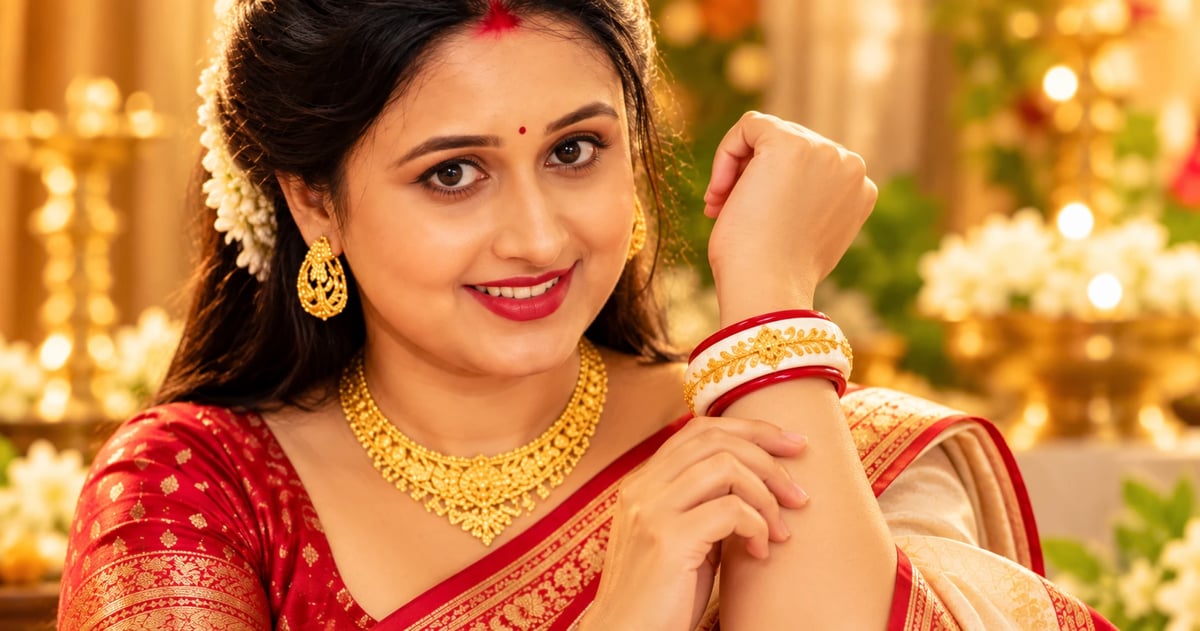
Picking a gold pola design comes down to one question. Will you wear it for a week, or for ten years? A traditional gold pola design has a broad, rounded red lacquer body with heavy patterned gold at both ends. A modern gold pola design is slimmer and lighter, often hinged, with matte, geometric or diamond-cut gold. Either can sit beside your shakha at the wedding. So the real decision is how you'll live in it afterwards.
This guide doesn't list the six named pola types or walk through full price maths. Those sit in our lal pola design guide. Here you'll see how the design has changed, and which side of that change fits your life.
What makes a gold pola design traditional
A traditional gold pola design starts with a wide, rounded red body. The gold is heavy and sits mostly at the two ends. That end work is called mukh, meaning "mouth". It is usually covered in nakshi (hand-chased raised patterns) in high-polish yellow gold. Shops call this gold work pola badhano, meaning gold bound onto the bangle.
The look came from an older material. Pola was once cut from red coral, which explains the deep colour. Today the body is lacquer, and that is not a downgrade.
India protects corals under Schedule I of the Wildlife (Protection) Act, 1972. As Mongabay India's May 2026 explainer on coral protection notes, collecting, trading or possessing live or dead coral is banned. Violations can bring three to seven years in prison. So a "real coral pola" offered today is a red flag, not a luxury.
You might be interested in exploring our light weight collections !
On the wrist, a traditional pair feels substantial. As a result, it reads instantly as Bengali bridal jewellery in photos, especially against a Banarasi. Still, the wide body catches on sleeves. Also, the raised nakshi traps soap and sindoor, so it needs more cleaning.
For the ceremony pair, a statement piece belongs here:
For the meaning and history behind the red, read our guide to pola bangles and Bengali custom.
What a modern pola design looks like in 2026
No public sales data tracks pola trends, so treat this as design direction, not a ranking. These are the changes showing up in current Bengali catalogues, ours included. They also match a wider shift. The Global InCH record of West Bengal jewellery notes demand for lighter pieces with minimal stones and fine work.
The shakha side shows the same pull. Conch artisans in Barrackpore told Sahapedia's photo-essay on the Sankhari craft that buyers now want larger sizes. That way the bangles slip off easily after an occasion.
Slim, hinged profiles that sit close to the wrist
Modern pola narrows the red body and trims the gold. Many pieces open on a hinge or screw, so they don't need to squeeze over your knuckles. As a result, they're easier to put on and take off. On the other hand, a hinge is a moving part, and it wears.
Flat faces and geometric edges
Instead of a round dome, you get a flat top or sharp bevelled edges. The gold might run as a thin straight line along the red. Then the whole piece reads more like a cuff than a bridal bangle.
Matte, textured and diamond-cut gold
High polish is giving way to brushed, sandblasted or diamond-cut finishes. Diamond-cut means small facets that catch light. Matte gold also hides fine scratches better than a mirror finish, which suits daily wear.
Meenakari and small stone accents
Also, some modern pieces are gold bangles with red meenakari (coloured enamel fired onto gold) instead of a lacquer body. Others add a row of small stones along the gold. Both look sharp. However, enamel can chip if knocked against a desk or doorframe. Stones add making charges and another thing to check.
For an everyday modern pair, a lighter piece fits here:
Traditional vs modern pola: side-by-side comparison
Traditional pola | Modern pola | |
|---|---|---|
Body shape | Wide, rounded, deep red lacquer | Slim or flat-faced, sometimes all-gold with red enamel |
Where the gold sits | Heavy mukh at both ends | Thin lines, edges or small panels |
Finish | High-polish yellow, nakshi | Matte, brushed or diamond-cut |
Closure | Usually a closed round bangle | Often hinged or screw-open |
Feel on the wrist | Substantial, snags sleeves | Light, sits under cuffs |
Best for | Wedding, Durga Puja, family events | Daily wear, office, travel |
In photos | Reads as bridal at a glance | Reads as refined, less formal |
Care | Nakshi needs a soft brush | Enamel and hinges need gentle handling |
Bill to check | Net gold vs gross weight | Build type, enamel weight, stone charges |
Neither column is more correct. The table just shows what you trade when you pick one.
Choosing your pola by occasion, age and wardrobe
Gold pola bangles for the wedding and the bride
If you're the bride, you want presence on camera. A broad traditional pair, or a worked mukh pola, holds its own beside heavy gold. Buy your daily pair at the same time, though. Otherwise the broad pair ends up on your wrist at the office, or in a drawer.
For a full wedding set around the pola, see our Bengali bridal jewellery guide.
Lightweight pola for daily wear after the wedding
For daily use, then, pick a slim profile with little raised gold. Less gold surface means less to scratch and re-polish. A soru pola, the narrow rounded type, is the usual choice. A slim hinged modern piece works too, if you check the hinge pin.
Age matters less than routine. A woman who cooks, commutes and types all day needs a lighter pola than one who works from home.
For a pair you won't take off, aim light:
The best pola design for Durga Puja
In fact, Puja is where a traditional design pays off. Worn with a laal paar saree for Ashtami anjali or Sindoor Khela, a broad nakshi pair photographs well. A modern meenakari piece with a wider face also works if you want colour without bulk. After Sindoor Khela, brush out the red powder from any raised work before storing.
For a festival-only pair, go broader:
Pola designs that suit a small wrist
Here, width matters more than weight. A wide choura chur pola can cover most of a slim forearm and look heavy. Pick a narrow profile instead, and wear one pair rather than stacking two. If your hand is wide but your wrist is small, a hinged design fits better. It closes snug on the wrist without sliding over your knuckles.
So measure both your wrist and the widest part of your hand before you order.
Can a modern pola be worn for the wedding ritual?
Usually, yes. The ritual centres on the red pola worn beside the white shakha. Custom doesn't fix a width, finish or gold pattern. In many families, the bride first wears both on the wedding morning, around the Dodhi Mangal ritual.
Two things keep a modern design safe for the ceremony. First, the red should stay clearly visible. Second, it should come as a pair that matches your shakha. The shakha side has its own gold work, covered in our sakha badhano design guide and gold sankha design trends.
Still, the grey area is an all-gold bangle with red enamel and no lacquer body. Some elders may not count it as pola. Families differ, so ask whoever will perform the ceremony before you buy.
A practical compromise works for many brides. Wear a red-dominant pair for the ritual, then switch to a modern pair for daily life.
Beautyfull Kanbala Collections waiting for you !
Hallmarking and billing on a lighter modern pola
The standard purity for any gold pola design is 22K, stamped 916. That means 91.6% pure gold. Stone-set modern pieces sometimes use 18K, because the harder alloy holds stones better. Confirm the purity before comparing two prices.
Next, ask which build you're holding. A lacquer-bodied pola is mostly lacquer by weight. Our lal pola design guide shows a 22K soru pair with 1.33g net gold against 13.01g gross. An all-gold modern pola is the reverse, so most of its weight is gold. If it carries enamel, ask whether the enamel weight is deducted before the gold rate applies.
After that, the price is simply net gold weight times the day's 22K rate, plus making charges and GST. Check today's gold rate and run the numbers in our gold price calculator.
Hallmarking is where lighter designs get confusing. The Bureau of Indian Standards' FAQ for jewellers exempts articles weighing less than two grams. It also exempts jewellers with annual turnover up to ₹40 lakh.
An all-gold modern pola of several grams therefore normally needs a hallmark with HUID, a six-digit ID, in covered districts. For a lacquer pola, the FAQ doesn't say whether "weight" means the whole bangle or the gold alone.
Either way, BIS says a hallmarked article's bill must show net precious metal weight and purity. Ask for both on any pola invoice. BIS also amended the hallmarking order three times in 2026, on 2 March, 28 April and 3 August. So check the current rules before you buy. Our guide to hallmark gold vs BIS gold explains the marks in plain terms.
Styling a modern pola with office and western wear
For the office, wear one slim matte pola beside your shakha and noa. The usual order runs shakha, then noa, then other bangles, as our gold noa design guide explains. Put your watch on the other wrist. Otherwise the watch face and the pola will scratch each other.
With a shirt dress, jeans or a co-ord set, a flat-faced geometric pola reads like a cuff. Keep the rest of your jewellery simple, and keep every gold piece the same tone. Mixed tones show up clearly in photos, even when they look fine in a mirror.
On some days, though, you won't want bangles at all. A pola ring carries the same red and gold on one finger. Our pola necklace design guide covers the same idea at the neckline.
By custom, the shakha and pola pair marks a married woman. Red-and-gold fashion pieces, like pola rings and pendants, are worn by unmarried women too. Practice varies by family, so your elders are the right people to ask.
Buying a gold pola design online: six checks
Build type. Is it a lacquer body with gold, or all-gold with red enamel? The answer changes the weight and price.
Net and gross weight. Both should be listed. If only one appears, ask before you pay.
Purity and hallmark. Look for 22K or 916, and a HUID where the rules require one.
Size and closure. Check the inner diameter, and whether the piece opens on a hinge.
Close-up photos. Ask for a clear shot of the join where gold meets lacquer or enamel.
Returns and exchange. Read the returns and refund policy before ordering a size you haven't tried.
You can compare profiles side by side in our pola collection.
The one decision to make before you shop
First, decide what you're buying for: the ceremony, or the years after it. For the ceremony, lean traditional and red-dominant. Daily life calls for modern, slim and matte. Need both? Then buy two pairs, and don't ask one piece to do both jobs.