

Choose the Right Pasa Earrings: Face Shape & Fit Guide

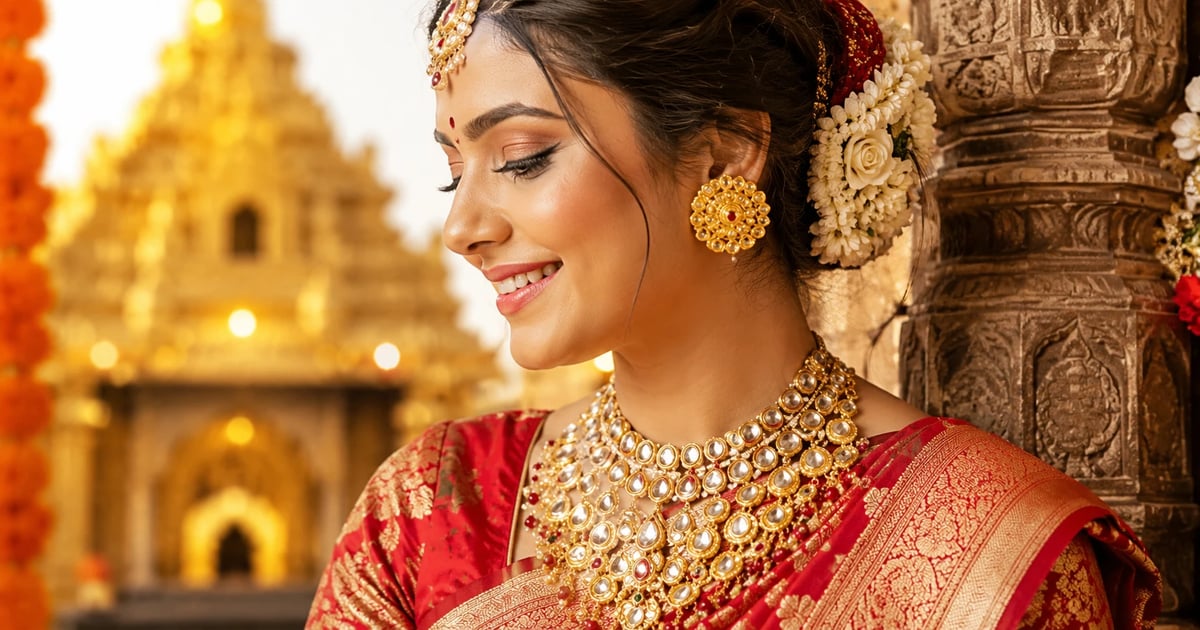
Pasa earrings sit right where your hairline meets your temple, and that single detail shapes your entire bridal profile. Pick the wrong weight or the wrong side, and it fights your hairstyle all day. This guide covers what actually matters: face shape, weight, material, and pairing — the parts most guides skip.
You're comparing before you commit, and that's the right instinct. A bridal pasa is a visible, photographed piece. Getting it right the first time beats a last-minute swap two days before the wedding.
What Is a Pasa in Bridal Jewellery?
A pasa, also called jhoomar or side tikka, is a head ornament worn at one temple. According to INTACH's heritage archive, it traditionally sits over one side of the head and traces back to the Mughal period. Most pieces are fan-shaped, crafted in gold or silver, and finished with stones and pearl drops.
Some modern pasa jewellery is made to be pinned into the hair. Other versions, including the pasha earrings at Biswakarma, are built as earrings, so the piece extends from the ear toward the temple instead of clipping into hair. Both do the same visual job: they frame the side of the face.
History and Cultural Significance of the Pasa
The pasa's fan shape and side placement come from Mughal-era royal ornament traditions. INTACH's archive describes one surviving example: a passa over 100 years old, made of gold with uncut diamonds, known as polki work. Its hand-crafted fish motif was meant to wish fertility on the bride, and the piece has stayed in one family for five generations.
That detail matters for buyers today. It shows the pasa was never a mass ceremonial accessory. It was a personal, often inherited, piece — which is why craftsmanship and material still carry real weight in how it's judged now.
One thing worth correcting: not every bride historically wore a passa, and it wasn't exclusive to Mughal courts either. Regional bridal traditions across North India adapted it differently over time.
Types of Pasa Designs You Will Find
Five materials dominate the pasa jewellery market. Each changes the look, weight, and price in a different way.
Kundan Pasa
Kundan work sets glass or synthetic stones into a gold or gold-toned base using a lac (resin) filling. A kundan passa gives a flat, glowing finish and comes in a wide range of price points, which is why it's the most common bridal pasa on the market.
Polki Pasa
Polki uses uncut, unpolished diamonds instead of faceted stones. For background on how diamonds are graded and what "uncut" actually means, GIA's diamond education resources are a reliable starting point. A polki pasa reads as more textured and antique than kundan, and it typically costs more because the stones are natural.
Jadau Pasa
Jadau is a setting technique, not a stone type — stones are embedded directly into molten gold rather than glued or claw-set. A jadau passa can carry kundan or polki stones and tends to be heavier because of the solid gold base.
Pearl Pasa
Pearl drops hang from a smaller metal frame, so pearl pasa jewellery is usually the lightest option on this list. It suits brides who want a softer, less structured side profile.
Gold Pasa
A plain or lightly stoned gold pasa design skips inset stones almost entirely. It photographs cleanly, works for smaller weddings or festive wear, and carries resale value tied to the gold itself rather than to craftsmanship or gems.
Don't miss out! Discover beautiful Jhumkas designed to complement every occasion.
Type | Look | Typical weight | Best for |
|---|---|---|---|
Kundan | Flat, glowing | Light–medium | Most bridal looks, wide budget range |
Polki | Textured, antique | Medium | Brides who want heirloom character |
Jadau | Rich, dense | Medium–heavy | Heavier lehengas, larger budgets |
Pearl | Soft, draping | Light | Delicate hairstyles, non-bridal wear |
Gold | Clean, minimal | Varies | Everyday festive wear, resale value |
How to Choose the Right Pasa for You
Four factors decide whether a pasa flatters you or fights you. Skip any one of them, and the piece can end up feeling wrong on the day.
Matching a Pasa to Your Face Shape
No single pasa design suits every face shape — despite what some product pages imply. If you have a round face, a longer, narrower pasa with vertical pearl drops tends to elongate the profile. If your face is longer or more angular, a wider, fan-shaped design fills out the temple area and softens sharp lines. Try the piece on with your hair styled the way you'll actually wear it on the day, not loose.
Pairing a Pasa With Your Hairstyle
A pasa needs a hairstyle it can anchor to. Sleek buns and low chignons give a pinned passa headpiece a stable base. If you're wearing loose curls or an open hairstyle, an earring-style pasa is usually more secure, since it doesn't depend on a hairpin holding through hours of dancing.
Coordinating a Pasa With Outfit Weight
Match the pasa's density to your outfit's embroidery, not the other way round. A heavily embellished lehenga can carry a jadau or polki pasa without looking overloaded. A lighter saree or simpler lehenga usually looks better with kundan or pearl.
Weight and Comfort Considerations
This is the factor competitors barely mention, and it's the one brides complain about afterward. A heavy jadau or gold pasa design pulls on the ear or scalp after several hours. Before you commit, ask to wear the actual piece for ten minutes and walk around in it. If it feels heavy standing still, it will feel heavier by the reception.
Pasa vs Maang Tikka: What's the Real Difference?
A pasa sits at the temple, on one side of the head. A maang tikka sits at the centre parting, hanging down the middle of the forehead. They're both bridal head jewellery, but they solve different styling problems: a maang tikka centres the look, while a pasa adds width and drama to one side.
Many brides wear both together for a full bridal head jewellery look, especially with mathapatti-style sets that link the two pieces with a chain across the hairline. Others choose one or the other, depending on hairstyle and how much head jewellery they want to manage through a long ceremony.
Which Side Should a Pasa Be Worn On?
There's no fixed rule here, whatever some product pages claim. Tradition and most current styling favour the right temple, often paired with jhumki or chandbali-style earrings on that side and a sahara or long earring balancing the left. Even so, the choice comes down to your hair parting, your comfort, and which side photographs better for you — not a strict cultural requirement.
Can You Wear a Pasa Without a Maang Tikka?
Yes. A pasa is a complete piece on its own and doesn't require a maang tikka to look finished. Plenty of brides wear a single-side pasa with statement earrings and skip the centre-parting piece entirely, especially with hairstyles that don't have a defined centre part, like side-swept buns or braided styles.
Pairing a Pasa With Earrings and Necklaces
Coordination matters more than matching exactly. If your pasa carries kundan work, kundan or polki earrings in the same tone read as a set even if the designs differ slightly. Our kundan-style earring guide breaks down how weight and hallmarking affect comfort in a similar way to a pasa.
For necklaces, keep the neckline lighter if your pasa is heavy, so the eye doesn't get pulled in three directions at once. A sahara or a delicate layered necklace usually balances a statement pasa better than a dense choker. If you're deciding between a full bridal set, our pearl sitahar vs gold sitahar comparison covers the same weight-versus-look trade-off you'll be making with a pasa.
You can also browse the full earrings collection or the tops and stud designs if you want a lighter piece to pair alongside a statement pasa.
✨ Check out Diamond Earrings: Best Designs & Buying Tips.
Styling Tips for Brides Wearing a Pasa
A few practical habits make a real difference on the day itself.
Get your hairstyle set first, then have the jeweller or stylist position the pasa against the finished style — not the other way round.
Ask your hairstylist to use a setting spray near the pasa's pin, so it doesn't shift as hair softens through the day.
If you're wearing a dupatta, test how the pasa sits under the fabric before the event, since drape weight can tilt a lighter piece.
For photography, remember a pasa reads best from three-quarter angles rather than dead-on, front-facing shots.
Common Buying Mistakes to Avoid
Most buying regret traces back to one of these four mistakes.
Buying for the photo, not the wear. A piece that looks striking in a product photo can still be uncomfortable after four hours of pinning and dancing.
Skipping the trial fitting. Weight and balance only become obvious once the piece is actually on your head, not in your hand.
Ignoring hallmark and purity details. Especially for gold pasa designs, purity claims should be verifiable, not just stated.
Matching by material name alone. "Kundan" and "polki" both cover a wide quality range; two kundan pieces can differ enormously in finish.
How to Check Pasa Quality Before Buying
For any gold pasa or gold-based piece, check for BIS hallmarking. As the Bureau of Indian Standards explains, a valid hallmark includes the BIS logo, the purity in karats, and a six-digit HUID number unique to that piece. This applies whether the pasa is entirely gold or gold with stone work.
For polki or diamond-set pieces, ask whether the stones are natural or lab-grown, and whether any grading documentation exists — GIA's consumer-facing diamond buying guide explains what that documentation typically covers. For kundan and imitation pieces, ask directly about base metal and plating thickness, since neither carries formal certification the way gold does.
Finally, check the clasp and pin mechanism by hand. A pasa that feels flimsy at the hinge in-store will only get worse under the pull of hair and a dupatta.
How Much Does a Bridal Pasa Cost?
Price depends on three things: material, stone type, and craftsmanship, in that order of impact. A kundan or imitation pasa costs the least, since it uses artificial stones and less gold. A gold pasa design scales directly with the daily gold rate and the weight of metal used. A polki or jadau piece costs more again, because natural uncut diamonds and hand-set work both add to the price.
We can't quote a fixed number here, since gold and stone prices shift regularly. Check current pricing directly against the day's gold rate before you budget, rather than relying on a figure that may already be outdated.
Can a Pasa Be Worn Beyond the Wedding Day?
Yes, and lighter versions are increasingly worn that way. A delicate pearl or slim gold pasa design works for festive occasions like Diwali or Karva Chauth, styled with a simpler hairstyle than a full bridal look. Heavier jadau or polki pieces tend to stay reserved for the wedding and reception, mainly because of weight and formality rather than any fixed rule.