

Best Gold Pearl Sitahar Design: Price, Weight and Buying Guide

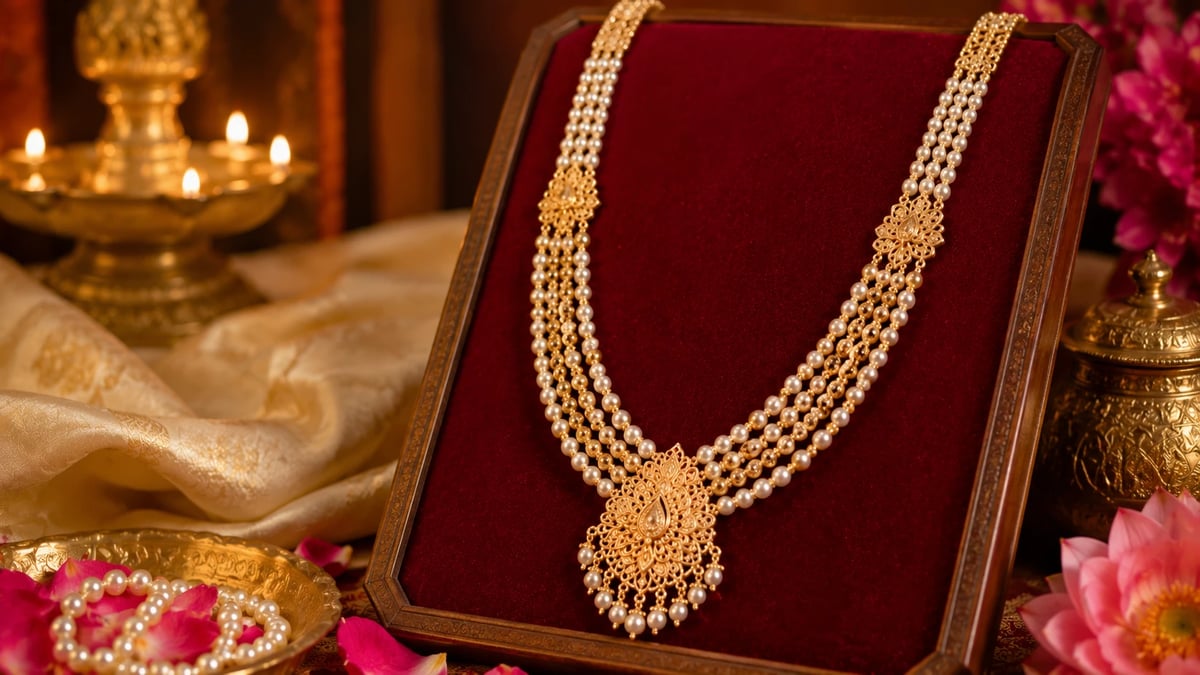
Pearl sitahar prices online can look wildly inconsistent — two designs that look nearly identical, priced a few thousand rupees apart. A pearl sitahar is a long, layered gold necklace strung with pearls, traditionally worn by brides and festive dressers across Bengal and much of India. There's no single fixed price for one — it depends on the gold purity used, how many grams go into the piece, pearl quality, and the making charges your jeweller applies on top. This guide breaks down real design categories, indicative weight ranges, what actually drives the price, and how to pick a design suited to your wedding or festive wardrobe.
What Is a Pearl Sitahar in Gold Jewellery?
A sitahar sits in the "long necklace" family — it falls past the collarbone, often to mid-chest or lower, unlike a choker or short necklace that sits at the throat. In gold, a pearl sitahar typically combines one or more pearl strands with gold beads, spacers, or a central gold pendant, sometimes finished in an antique or temple-style look.
The design has deep roots in Bengali bridal jewellery, where a long pearl-and-gold necklace is a trousseau staple, but it's worn well beyond weddings today — for pujas, family functions, and festive dressing generally. If you've seen it listed as "sitahaar," "moti sitahar," or "pearl chandra haar," these are largely the same category with regional spelling and minor design variation.
Popular Pearl Sitahar Designs in Gold Right Now
Design trends move, but pearl sitahars mostly fall into three broad categories based on how much gold and how many pearl strands go into them.
Traditional Long Pearl Sitahar
The classic version: multiple pearl strands separated by gold beads or spacers, finished with a gold or gold-and-stone pendant. Temple motifs, filigree work, and antique gold polish are common, and it's usually worn as the centrepiece of a bridal or festive look.
Lightweight Pearl Sitahar for Festive Wear
Not every occasion needs a heavy bridal piece. A lightweight pearl sitahar design in gold typically uses a single or double pearl strand with thinner gold wire or fewer gold spacers, which brings both the gold weight and the price down considerably. These suit daily festive wear, layering under other necklaces, or gifting.
A quick word on gold-plated versions: a gold plated pearl sitahar costs far less because it's a base metal core with a thin gold layer on top, not solid gold. That's a reasonable choice for occasional wear on a tighter budget, but it won't carry a BIS hallmark for gold purity, won't hold gold value at exchange, and the plating wears thin with regular use. Worth knowing before you buy, not after.
Heavy Bridal Pearl Sitahar Sets
For the wedding day or the reception, many brides choose a heavier, multi-strand pearl sitahar, sometimes paired with kundan or meenakari work on the pendant. These carry noticeably more gold weight, which is where most of the price gap between a festive piece and a bridal one actually comes from.
How Much Does a Gold Pearl Sitahar Weigh?
Because a sitahar is long and often multi-stranded, it generally uses more gold than a short necklace of similar design density. Exact weight depends on strand count, length, and how much gold versus pearl is in the piece, but as a broad, indicative guide:
Style | Approx. weight range* | Typically worn for |
|---|---|---|
Lightweight, single-strand | ~8–15 grams | Daily festive wear, layering |
Medium, double or triple-strand | ~15–25 grams | Puja, family functions, gifting |
Heavy bridal, multi-strand | ~25–50+ grams | Wedding day, reception, trousseau centrepiece |
*General, indicative ranges only — not a quote for any specific design. Weight varies with craftsmanship and pearl size, so always ask for the exact gram weight on the item's hallmark card before you buy.
What Factors Affect the Price of a Gold Pearl Sitahar?
A pearl sitahar's price is built from several moving parts, not one number:
Gold purity and the day's gold rate. Most traditional pearl sitahars are made in 22K gold. The prevailing gold rate changes daily, and benchmark rates published by the India Bullion and Jewellers Association are what most Indian jewellers reference when pricing gold content.
Gold weight. More grams, more strands, thicker wire — all push the price up, independent of design style.
Making charges. Handcrafted work, filigree, antique finishing, and intricate pendant design carry higher making charges than a simply strung pearl piece.
Pearl quality. Natural versus cultured pearls, size, shape and lustre all affect cost, and pearls are usually priced separately from the gold weight.
GST and other statutory charges, applied on top of the gold value and making charges at billing.
Because gold rates move daily, we won't quote a fixed pearl sitahar gold price here — ask your jeweller for a same-day breakdown showing gold weight, rate, making charges and pearl cost separately, so you can see exactly what you're paying for.
Gold Purity: 22K vs 18K for a Pearl Sitahar
Most traditional gold pearl sitahar designs use 22K gold (91.6% pure), the standard for classic Indian bridal jewellery, and it holds up well on statement, low-wear-and-tear pieces. Some contemporary designs use 18K gold instead, which is more durable and better suited to pieces with heavier stone-setting, at the cost of slightly lower gold content.
Neither is objectively better — it comes down to whether you're prioritising traditional gold weight or design durability, especially if the sitahar carries stones alongside the pearls.
How to Verify the Authenticity of a Gold Pearl Sitahar
Hallmarking has been mandatory for gold jewellery sold in India since June 2021, administered by the Bureau of Indian Standards. A genuine hallmark on a gold pearl sitahar carries the BIS mark, the purity grade (such as 22K916), and a six-digit HUID (Hallmark Unique Identification) number unique to that piece.
Before you buy, check that all three marks are visible and legible, and ask for the item's hallmark card, which should show the purity and net gold weight separately from the pearl and any stone weight. Pearls themselves aren't hallmarked — certification applies to the gold content only.
Choosing the Right Pearl Sitahar for Weddings and Festive Occasions
For the wedding day itself, a heavier, multi-strand design tends to photograph and carry better against bridal red or heavily embroidered outfits — it needs that visual weight to hold its own. For sangeet, reception, or family functions, a medium or lightweight pearl sitahar design works better against simpler outfits and is far more comfortable through a long evening.
If you're torn between a long pearl sitahar and a shorter necklace for the same outfit, think about neckline: a sitahar suits deep or boat necklines and blouses without heavy neck embroidery, since it sits lower and needs room to fall. You can browse a range of handcrafted pearl sitahar designs to compare strand counts, pendant styles and finishes side by side before deciding.
Styling Tips: Wearing Your Pearl Sitahar Well
Layer with restraint. One sitahar plus a pair of statement earrings usually reads better than a sitahar, choker and bangles all competing for attention.
Match metal tone. Keep other gold jewellery — bangles, maang tikka, earrings — in the same gold tone as the sitahar for a cohesive look.
Let the neckline lead. Deep or boat necklines let a long sitahar fall naturally; high necklines tend to bunch it awkwardly.
Time it right. Save heavier multi-strand sitahars for the main ceremony, and switch to a lighter piece for pre-wedding functions where you'll be moving and dancing.
Caring for Your Gold Pearl Sitahar
Pearls are softer and more porous than gold, so they need more careful handling than a plain gold chain:
Put the sitahar on last, after perfume, hairspray and makeup — these chemicals can dull pearl lustre over time.
Wipe pearls with a soft, dry cloth after wear rather than a jewellery cleaning solution, which can strip their surface.
Store it flat or loosely coiled in a soft pouch, separate from harder jewellery that could scratch the pearls or gold links.
Get the gold clasp and stringing checked periodically by your jeweller — restringing is normal long-term maintenance for any pearl necklace.
Ready to Compare Designs?
Weight, purity and making charges vary by piece, which is exactly why comparing designs side by side — rather than going by price alone — gets you a sitahar that fits both your budget and your outfit. Explore gold sitahar designs from Biswakarma Jewellery Shilpalaya's handcrafted collection to see current styles, weight categories and pendant options.