

Pearl Sitahar vs Gold Sitahar: Which One Will You Wear?

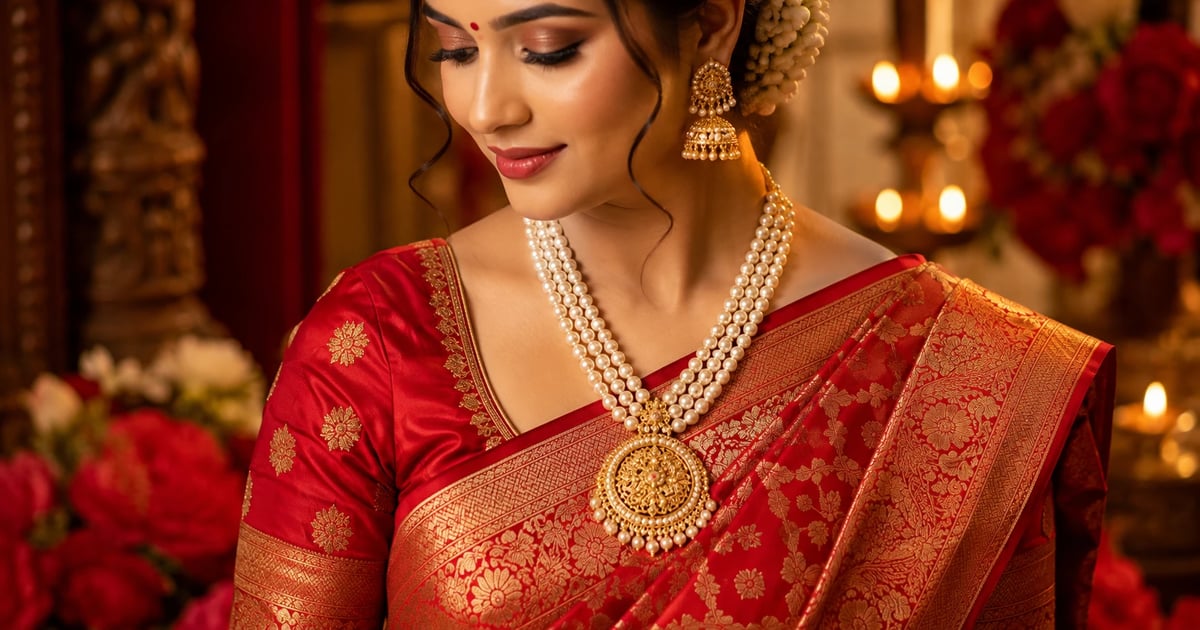
Buy the wrong sitahar and it lives in a locker after the wedding. That's the real cost, and price tags don't show it. So here's the short version of pearl sitahar vs gold sitahar. Pearl wins on comfort, price and repeat wear. Gold wins on tradition and long-term exchange value. Neither is universally better. In practice, it depends on your functions, your sarees, and how often you'll actually wear it.
Pearl sitahar vs gold sitahar: the short answer
A pearl sitahar is a long Bengali necklace made mostly of pearl strands with gold spacers. A gold sitahar uses gold as its main material. Pearl versions weigh less and cost less. Gold versions hold stronger exchange value. Choose pearl for comfort and repeat wear, gold for tradition and resale.
Both sit in the same family. A traditional Bengali sitahar falls well below the collarbone, whichever material leads. The difference is the ratio of pearl to gold. That ratio then changes everything downstream — weight, price, styling range, and what a jeweller pays you back later.
What a pearl sitahar is, and what it isn't
Pearl-dominant sitahars string three to seven strands of pearls between gold spacers. A gold pendant anchors the front. So what you're really buying is a long pearl necklace with a gold pendant. You'll also hear it called a pearl haar. In Bengali workshops, strand count gets its own vocabulary — panch lahiri for five strands, saptha lahiri for seven.
The gold is still real gold. That surprises people. In fact it sits in the spacers, the clasp, the pendant and often the side caps.
What it isn't: a gold-plated pearl necklace. Plated pieces use base metal under a thin gold coat. So they cost a fraction and wear thin within a few years. Above all, they carry no gold value at exchange. Ask which one you're being shown.
What a gold sitahar is, and where it differs
A gold sitahar carries its design in the metal itself. Think filigree panels, temple jewellery motifs, a peacock pendant, or repeating floral links. Pearls may appear as accents, but they aren't structural.
That construction is why gold sitahars weigh more. More grams of gold, more presence, more money. Browse gold sitahar designs alongside pearl sitahar designs. At the same length, the two read very differently.
Gram weights and price mechanics sit outside this comparison. Instead, our pearl sitahar buying guide covers that ground in detail.
Pearl vs gold sitahar compared on 8 points
Point | Pearl sitahar | Gold sitahar |
|---|---|---|
Main material | Pearl strands, gold spacers | Gold links, panels, pendant |
Typical feel | Light on the neck | Noticeably heavier |
Price driver | Pearl quality plus gold parts | Gram weight plus the day's gold rate |
Traditional read | Softer, Bengali sabeki | Strongest traditional signal |
Works after wedding | Yes, with sarees and kurtas | Mostly festive occasions only |
Upkeep | Restringing, careful storage | Occasional polish |
Exchange value | Gold portion only | Full gold weight |
Best for | Reception, repeat wear, comfort | Wedding day, heirloom intent |
Still, read that table as tendencies rather than rules. A heavy multi-strand pearl piece can outweigh a delicate gold chain-style sitahar. Plenty of designs sit in the middle too. A balanced pearl and gold sitahar splits the difference on weight, price and exchange value.
How each one looks against a Banarasi saree
Banarasi silk carries dense zari work. It competes. Against that much metallic thread, a gold sitahar can disappear into the fabric. That happens especially in photographs under warm lighting.
Pearls solve it with contrast. White against red or magenta Banarasi reads clean from across a room. That's why so many Bengali brides pair a pearl sitahar with the ceremony Banarasi.
On the other hand, gold wins on plainer ground. Against Dhakai jamdani, tussar, or a matte georgette, a gold sitahar has room to lead. So match the necklace to the saree's busyness, not to the occasion's importance.
Which functions each sitahar actually suits
Wedding day favours gold. The look is expected, and it photographs well against heavy bridal reds. Above all, it carries the visual weight a bridal outfit demands.
Reception is where pearl sitahars earn their place. Those outfits tend towards lighter fabrics and simpler necklines. A pearl sitahar suits that register. Plus you'll still be comfortable four hours in.
Ashirbad, gaye holud and boubhat sit in between. A lightweight pearl sitahar works well here, particularly when you're moving and greeting people. So coordinate whichever you choose with the rest of the set. Ratan chur designs and gold sankha follow the same weight logic.
Comfort over a six-hour wedding day
Weight lands on a narrow strip at the back of your neck. A heavy gold sitahar concentrates that load. As a result, most people feel it by hour four.
Pearls distribute differently. Strands sit flatter and flex with movement. Which means the same gram weight feels lighter in pearl form.
Blouse fabric matters more than brides expect. Heavy neck embroidery pushes a sitahar forward and makes it swing. So if your blouse has thick zari at the neckline, favour the lighter piece. Otherwise you'll be adjusting it all evening.
What upkeep each one really needs
Pearls are organic and softer than gold. Perfume, hairspray and sweat dull their surface over time. So put the sitahar on last. Then wipe it with a dry cloth.
Silk thread stretches. So any strung pearl piece needs restringing eventually. A multi-strand sitahar needs it more often than a single-strand necklace. Budget for that as a recurring cost, not a one-off repair.
Gold asks for far less. Store it away from harder pieces, and get the clasp checked now and then. On maintenance alone, gold is the lower-effort choice.
Cost, and the cost-per-wear maths nobody does
Pearl sitahars generally cost less than comparable gold ones, because less gold goes into them. Freshwater pearls keep that gap wide. GIA notes they're the most affordable pearl type, with the most produced per mollusc.
Now divide by wears. A gold sitahar worn twice in ten years costs a great deal per outing. But a pearl sitahar worn at the reception, then at two pujas a year, works out cheaper per wear. Even though it holds less metal.
That's the calculation most buying guides skip. So ask for a written breakdown showing gold weight, the applicable rate and pearl cost separately. Current rates sit on our Kolkata gold rate page, and they move daily.
Exchange and resale: what carries value
Gold content is what jewellers typically value at exchange, based on weight and purity on the day. Pearls and craft work generally aren't valued at gold-exchange rates.
As a result, a gold sitahar returns more of its purchase price. That's the honest position. In fact it's the strongest argument for choosing gold if you see jewellery partly as savings.
Two cautions, though. Exchange terms differ between jewellers, so confirm the policy in writing before you buy. And no jeweller can promise a future rate. Gold prices move, and resale value is never guaranteed.
How to pick the right sitahar length
Sitahars are long by definition. Trade lengths run roughly 20 to 24 inches for matinee, and 28 to 36 inches for opera. Most sitahars land in that upper band.
First, measure where you want the pendant to fall. Then buy to that. Below the bustline reads traditional, while just above it reads modern and suits shorter frames.
One practical check: try the length over the actual blouse you'll wear. A high neckline eats three inches of drop. So a sitahar that looked right over a t-shirt can sit awkwardly.
How to check the pearls are real before you pay
Real pearls in a strand vary. Slight differences in size, shape and surface are normal. In fact perfect uniformity is a warning sign, not a quality signal.
Watch the labels too. GIA has flagged sellers marketing bead-nucleated Chinese freshwater pearls as "baby akoya" or "freshwater akoya". They aren't akoya. So ask plainly whether pearls are freshwater or saltwater, and get the answer on the bill.
For a finished piece, independent labs can help. IGI screens component gemstones in finished jewellery reports to establish natural or simulant origin. Usefully, that happens without taking heirloom pieces apart.
Why matching matters more on a sitahar
Pearl quality isn't one number. GIA assesses pearls on seven value factors — size, shape, colour, lustre, surface, nacre quality, and matching across pieces.
That last one deserves attention here. Matching only applies to jewellery holding two or more pearls. Which describes every sitahar ever made.
A five-strand sitahar shows mismatched pearls badly. Uneven overtone or size across strands catches the eye immediately, especially in photographs. So hold the piece under daylight and look along the strands, not at a single pearl.
Which sitahar to choose, by scenario
Choose a gold sitahar if the wedding day matters most. Also choose gold if you want the piece to hold value, or you're buying with heirloom intent. Above all, it suits a plainer saree that needs a focal point.
Choose a pearl sitahar if comfort matters, or if you have several functions to dress for. It's also the budget-friendlier route. Plus it's the better pick against heavy Banarasi zari, and far more likely to be worn again.
Buying both is common in Bengali trousseaus, and it isn't extravagance. Gold handles the ceremony. Pearl handles everything after. Still, if the budget stretches to one, be honest about your calendar. A piece worn twice a year beats a grander one worn once.
Making the call
Sitahar jewellery gets bought for one day, then owned for decades. So the material question is really a frequency question. Gold holds value and owns the wedding day. Pearl gets worn.
Neither answer is wrong. But the one you'll regret is the piece bought for a single photograph. So look at your next two years of functions, then decide. And if you want to compare side by side, our full sitahar collection shows both styles. Weights range widely.