

Gents Kada Designs: Latest Styles for Men in 2026

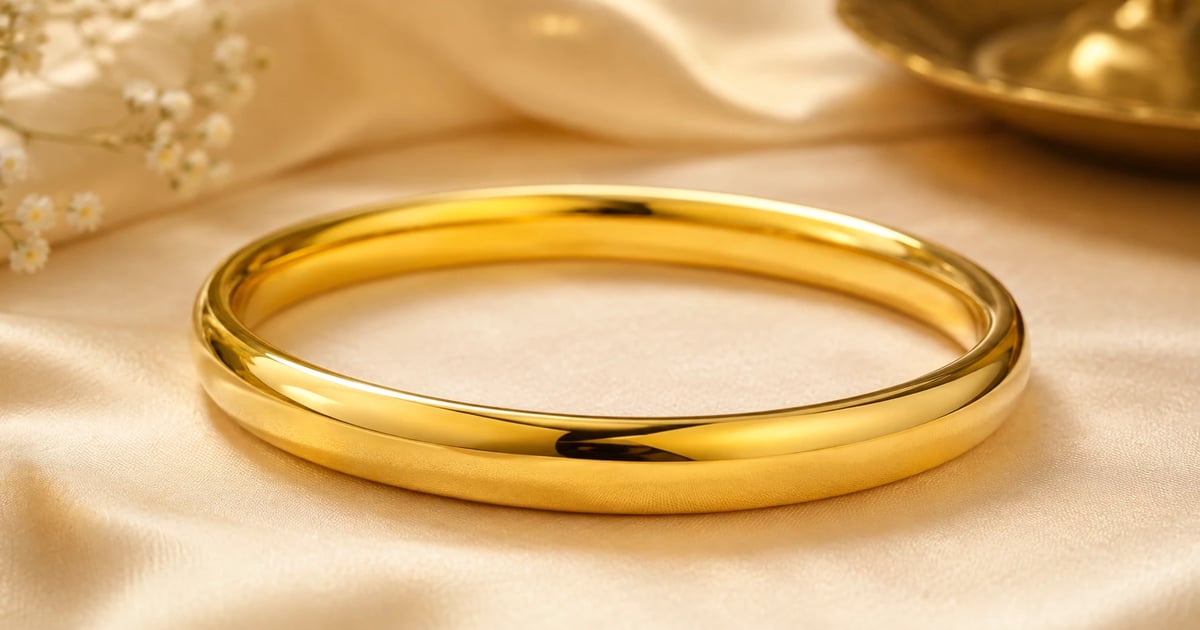
Most men shopping for a kada are stuck on one question. Will this still look right in five years? For 2026, the safest gents kada choice is a slim, plain or lightly textured band. Widths around 8–12mm sit comfortably on most wrists. Save the broad, heavy pieces for weddings and festivals.
That's the short version. Below you'll find the six designs actually moving this year. Then which one matches your dress code. Plus how width changes the look on your wrist, and the hallmark checks worth running before you pay.
What separates a kada from a men's bracelet
A kada holds its shape. A bracelet drapes. That one difference decides how each piece sits, wears and sizes.
Because a kada is rigid, it can't adjust to your wrist. So you have to size it correctly the first time. A bracelet closes with a clasp, which forgives a millimetre or two.
Rigidity also changes how the piece behaves through the day. A kada rotates slowly and stays put. Chain bracelets slide, bunch under a shirt cuff and catch on knitwear.
That's why a kada usually wins for daily wear. It asks nothing of you once it's on.
Latest gents kada designs trending in 2026
Price is reshaping this category faster than fashion is. The World Gold Council's Q2 2026 India gold demand report puts domestic gold prices around 59% higher year on year. That rise, the report says, is accelerating a shift towards lighter-weight, lower-carat jewellery.
So the heavy 40-gram default is fading. Six designs are carrying the demand instead.
Plain polished gold kada
The one most men end up wearing. A single unbroken band, high shine, no pattern.
It reads as deliberate rather than decorative. That's why it outlasts changing tastes better than anything else here.
Downside: a mirror polish shows every scratch. If you work with your hands, expect visible wear within months.
Textured and engraved gold kada
Cut patterns, hammered faces, brushed and matte finishes. The interest comes from the metal itself rather than from stones.
Texture hides scuffs remarkably well. A brushed surface absorbs daily marks that a polished band would broadcast.
Pick this if you want presence without glare. It also photographs well at close range.
Sterling silver kada
Sterling silver — 92.5% pure, marked 925 — is where most younger buyers start. Its cool grey suits jeans, chinos and a steel watch better than yellow gold does. Our own classic silver kada designs sit in this bracket.
Cost is the obvious draw. At the same weight, silver sits far below gold.
Tarnish is the trade-off. Silver dulls in humid air and wants a wipe every few weeks.
Diamond-set kada
Small stones set into a gold band, usually along a channel or in a bezel row.
Honest answer on daily wear: not ideal. Prongs snag on fabric, and a knock can loosen a stone quietly.
Flush and bezel settings sit level with the metal. So they survive daily knocks far better. Ask for those if you plan to wear it constantly. Otherwise keep a diamond kada for occasions.
Slim minimalist kada
Yes, minimalist kadas are genuinely gaining ground, and there's data behind it. The World Gold Council ran a Kantar survey of 1,963 Indian consumers from 22 May to 3 June 2026. That survey found buyers choosing lighter pieces, and buying less often.
Slim bands run narrow and low in weight. They slide under a shirt cuff without a bulge. The same logic drives our guide to lightweight gold chains under 10 gms.
Above all, they let you wear a watch on the same wrist. Broader designs fight the strap.
Open cuff kada
A band with a gap, so it slides on from the side of the wrist rather than over the hand.
That gap solves a real problem. If your knuckles are broad, a closed kada that clears your hand will sit loose on your wrist.
Cuffs also use less metal for the same visual width. On a gold piece, that shows up directly in the bill.
Best kada picks by occasion and dress code
The mistake here isn't the metal. It's expecting one kada to cover a boardroom and a baraat.
Daily wear: light, smooth, forgettable
Comfort beats everything else. You want a smooth inner face, low weight and nothing that catches.
Skip sharp edges and raised stones. Both snag on shirt cuffs, laptop edges and car door handles.
A plain or brushed band in 22K gold or 925 silver is the reliable pick.
Office wear: slim, matte, quiet
Most Indian offices carry no written jewellery rule. Still, the unwritten one is real. Nothing should catch light across a meeting room.
A slim matte or brushed band clears that bar easily. White metals read quieter than yellow gold under office lighting.
Wear it on your non-watch wrist if the strap is broad. Two competing objects on one arm reads as clutter.
Wedding wear: broad, warm, photographed
Wedding photography flattens everything. A slim kada that looks right in the mirror can vanish in a group shot.
So go broader than instinct suggests. A wider polished or engraved gold band holds its own against a sherwani's detailing.
The Punjabi kada shape — plain, broad, round — remains the safest formal choice.
Festive wear: textured and mid-weight
Festivals sit between the two. You're dressed up, but you're also eating, driving and carrying somebody's child.
Mid-weight textured gold is the sweet spot. It brings enough visual weight for a kurta without wedding-piece bulk.
Oxidised silver works here too, especially against darker fabrics.
Which metal is best for a gents kada
A gents kada in 22K gold behaves nothing like one in 925 silver. There's no single right answer, and anyone offering one is selling something. Match the metal to how you actually spend your days.
Metal | Purity you'll see | Best for | Watch out for |
|---|---|---|---|
22K gold | 916, or 91.6% pure | Weddings, festivals, gifting | Soft metal; a wide band dents |
18K gold | 750, or 75% pure | Daily wear and stone settings | Paler colour than 22K |
Sterling silver | 925, or 92.5% pure | Everyday wear on a budget | Tarnishes in humid air |
Platinum | Marked PT950 by convention | Men who react to gold alloys | Not a BIS-hallmarked metal in India |
Stainless steel | No precious-metal grade | Rough work, travel, the gym | No exchange or resale value |
Two things that table can't show you.
First, the Bureau of Indian Standards covers only two precious metals under hallmarking: gold and silver. A platinum or steel kada therefore carries no BIS mark. You're relying on the seller's own paperwork instead. Our gold purity check before buying walks through what that paperwork should say.
Second, steel has no exchange value. Indian jewellers take back gold and silver against a new purchase. Nobody takes back steel.
So the steel-versus-silver question resolves cleanly. Choose steel for a knockabout piece you'll replace. Choose 925 silver if you want resale standing behind it.
What actually drives the price on your bill
Three numbers decide what you pay. All three should appear separately on the bill.
Metal weight comes first. The gram weight gets multiplied by that day's rate for that purity. Ask which rate applied, and on which date.
Making charges come second. These cover the craftsmanship, and they swing widely by design. A hand-engraved kada carries far higher making charges than a plain band of equal weight.
Tax comes third. Ask for the applicable GST as its own line, rather than folded into a total.
One thing to watch on stone-set pieces. Confirm whether the quoted weight includes the diamonds. Stone weight billed at gold rates causes a lot of disputes.
Rates move daily. So treat any figure you're quoted as valid for that day only.
Getting the size and width right on your wrist
Most gents kada disappointments trace back to diameter, not design. This is where online purchases go wrong.
How to measure your kada size at home
Press your fingers and thumb together, as if sliding a bangle on. Measure across the widest part of your hand.
Treat that figure as your minimum inner circumference. A closed kada must clear your knuckles, not merely your wrist.
Add a few millimetres for easy removal. Around 5mm is a common starting allowance. Confirm the exact figure with your jeweller.
Measure your wrist separately, just above the bone. The gap between the two numbers predicts how much the kada slides.
Choose an openable or cuff design if your hand measurement runs far above your wrist measurement.
How wide a kada should be for your wrist
Almost nobody explains this part, and it changes the look more than the design does.
Width is proportional, not absolute. The same 15mm band looks balanced on a 19cm wrist and heavy-handed on a 15cm one.
Judge it this way. Hold the kada against your wrist and watch how much skin shows either side. If the band crowds the wrist bone, it's too wide.
Two mechanical points are worth knowing. A wider kada needs a larger inner diameter to clear the same hand. Its inner surface forms a cylinder, not a thin ring. Width also drives weight quickly, because doubling the width roughly doubles the metal.
Treat every width figure here as a starting point, not a standard. Try the band on before committing.
Between two sizes? Go narrower. A slightly narrow kada reads as intentional. A slightly wide one reads as borrowed.
Hallmark checks to run before you pay
Three checks, two minutes, and they separate 22K from "sold as 22K".
Every gold gents kada should carry three hallmark elements. Those are the BIS logo, the purity in caratage and fineness, and a six-digit alphanumeric HUID. Every hallmarked article gets its own HUID. Check it yourself in the BIS Care app, using the Verify HUID feature.
Now the details most buyers never hear. BIS permits six gold grades for hallmarking: 14K, 18K, 20K, 22K, 23K and 24K. So a purity mark outside that set deserves a question. Any buyer can also have a piece independently assayed at a BIS-recognised centre for ₹200 by fire assay.
A registered shop must keep a 10X magnifying glass on the counter to show you the mark. Ask for it. A jeweller who can't produce one has already answered your question.
Silver works differently. BIS also lists six silver grades: 800, 835, 900, 925, 970 and 990. But the mandatory order covers gold jewellery. So ask specifically whether a silver kada carries a hallmark.
Coverage is geographic rather than national. Mandatory hallmarking has expanded district by district. The sixth phase reached 380 districts from 2 March 2026, with more districts notified since. Check whether yours is covered before assuming the shop is obliged.
One limit deserves stating plainly. A hallmark certifies purity and nothing else. It says nothing about making charges, build quality or whether the price is fair. Our breakdown of hallmark gold vs BIS gold covers what the mark does and doesn't promise.
How to style a kada with your outfits
A gents kada works with western outfits more easily than most men expect.
With a plain tee and jeans, a single silver or matte gold band does the whole job. Nothing else on that wrist.
Under a formal shirt, keep the width down. Anything much over 12mm pushes against the cuff and shows through the sleeve.
Kurtas and sherwanis give you room. Broader bands and visible texture work there, because the outfit already carries detail of its own.
One rule holds across all of them. Pick a side: watch on one wrist, kada on the other. Stacking both on one arm looks accidental unless the kada is genuinely slim.
Metal matching matters less than people claim. Even so, three different metals across your watch, belt buckle and kada will fight each other.
What a kada means to the men who wear one
Meaning is part of why this piece outlasts trends.
In Sikh tradition the kara is one of the five articles of faith. It's traditionally an iron or steel band, worn for life rather than chosen as a style.
Punjabi and Rajput traditions carry a different association. Strength, restraint, and a quiet marker of standing. Meanwhile plenty of men across India wear one for none of those reasons, and simply like how it sits.
All three are legitimate. Nobody needs a heritage claim to wear a band on their wrist.
Choosing a kada you will still wear in five years
Go back to the question at the top. Will you still wear it in five years?
The gents kada that passes that test usually shares three traits. Modest width, a finish that hides wear, and a shape you never had to explain.
Buying your first one? Start narrow and plain. You can add a broader wedding piece later. Going the other way costs more. Buying heavy first, then discovering it stays in the locker, is the expensive mistake.
And take the width question seriously. Two men can buy the identical design at the identical weight. It will look right on one and wrong on the other. That's proportion, not price.