

Gold Maang Tikka Designs for Every Occasion
 Sujoy Dhar
8 min read
Sujoy Dhar
8 min read
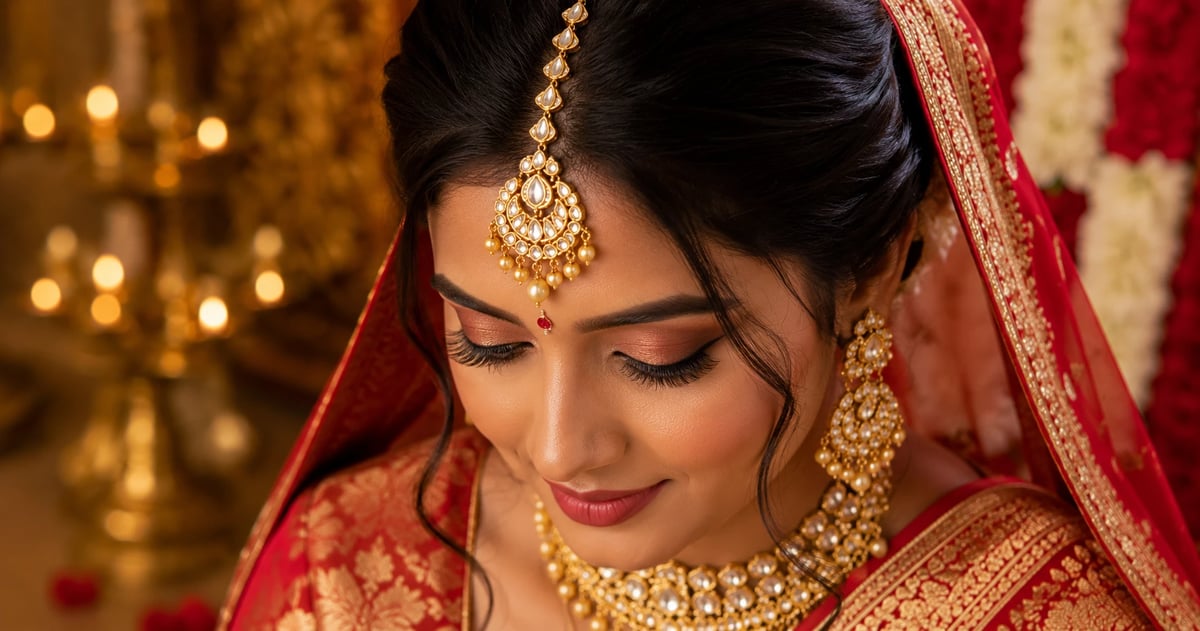
Picking a gold maang tikka is not about finding the prettiest one in the catalogue. A wedding piece, an engagement piece and a festival piece solve different problems. The right gold maang tikka design depends on your occasion, your face shape and the outfit neckline you're pairing it with, not on how ornate the setting looks in a photo.
This guide sorts designs by where you'll actually wear them. You'll find bridal, festive, lightweight, antique, temple and modern options, plus the face-shape and styling questions most design galleries skip entirely.
Why Your Occasion Should Decide the Design
A tikka bought for a six-hour wedding reception rarely works for a two-hour puja. Heavier settings photograph beautifully but pull at the hairline by evening. Lighter settings move easily but can look thin under wedding lighting and heavy bridal wear.
So the smarter approach is occasion-first, not design-first. Ask what you're wearing it for, how long you'll wear it, and how often you'll reach for it again. A single versatile 22K gold maang tikka design often serves engagements and family functions equally well. A dedicated bridal piece, on the other hand, earns its cost only if it's built for one specific day.
Bridal Gold Maang Tikka Designs for the Wedding Day
Bridal gold maang tikka designs typically run heavier than everyday pieces, generally somewhere between 8 and 15 grams in 22K gold, since they need to hold their own against a full bridal set. Kundan and polki work dominate this category, often layered with pearl embellishments along the chain for extra movement.
For the best gold maang tikka designs for brides, match the tikka's stone work to your necklace rather than buying it in isolation. A bridal gold maang tikka with pearls pairs naturally with a pearl-strung mala; a solid kundan piece pairs better with a stone-heavy choker. If your reception runs long, ask your jeweller about a detachable pendant drop — it lets you lighten the piece midway through the evening without removing the whole tikka.
Gold Maang Tikka Designs for Engagement Ceremonies
An engagement gold maang tikka doesn't need wedding-day weight. Most brides-to-be do better with a piece in the 4 to 8 gram range, delicate enough for photographs that last two or three hours rather than a full day.
A simple polki or single-string design photographs cleanly and won't compete with the ring for attention. If you're planning to wear this piece again at future family functions, choose minimal colour work — plain gold or subtle kundan ages better across occasions than a heavily coloured stone setting.
Festive Gold Maang Tikka Designs for Diwali and Puja
Festivals call for a different brief entirely. Simple gold maang tikka for festive wear should be light enough for a full evening of visiting, standing and prayer, without needing constant readjustment.
A 3 to 6 gram design in plain gold or light kundan covers Diwali, Durga Puja and Navratri comfortably. Yes, a gold maang tikka works for festivals just as well as it does for weddings — the piece simply needs to match the occasion's pace, not its formality.
Lightweight Gold Maang Tikka for Family Functions
Lightweight gold maang tikka designs under 10 grams are the most versatile purchase in this category, since they cross over between engagements, family functions and festivals without looking out of place at any of them.
Are lightweight gold maang tikkas suitable for weddings, though? For a close relative's wedding or a sangeet, yes. For your own wedding day, a 5 gram gold maang tikka can still look complete if the design uses fine filigree rather than open space to create visual presence — thin gold wire holds its shape better under lights than you'd expect.
Antique and Temple Gold Maang Tikka Designs
Antique gold maang tikka designs for bridal look pull from Rajasthani and Mughal-era motifs, often finished with an oxidised or matte gold surface instead of high polish. Temple gold maang tikka designs draw on South Indian bridal jewellery traditions, featuring gold maang tikka designs with temple motifs like Lakshmi, peacocks or lotus carvings.
Both styles sit heavier and more structured than modern pieces, which is exactly what makes them work with rich fabrics. A silk saree or a heavily embroidered lehenga can carry the visual weight of an antique or temple piece without either competing for attention.
Modern Gold Maang Tikka Designs for Lehenga and Fusion Wear
Modern gold maang tikka designs favour open, geometric settings and single-drop pendants over dense stonework. The latest gold maang tikka design trend leans toward slim chains with one central motif, closer to a pendant than a traditional matha patti.
Modern gold maang tikka designs for lehenga pair naturally with this direction, since a lehenga's fuller silhouette can carry a sleeker, more minimal tikka without the look feeling incomplete. How do you style a maang tikka with modern ethnic wear? Keep the rest of your head jewellery minimal — one tikka, no additional hair chains — and let the outfit's embroidery do the rest of the talking.
Choosing a Gold Maang Tikka for Your Face Shape
How do you choose a gold maang tikka for your face shape? Start with what the tikka needs to correct, not what looks trendy on someone else.
Which gold maang tikka suits a round face? Look for a longer vertical drop or a slim passa-style design — the length adds visual balance that a round or wide pendant won't give you. For a square face, a rounder or curved outline softens strong jawlines better than an angular design. Oval faces carry almost any shape comfortably, including a bold borla or a wide matha patti, since there's no sharp feature to balance against.
A word of honest caution: no single design suits every face shape, whatever a product page might claim. What flatters you also depends on your hairstyle, your forehead width and where the tikka sits against your parting. Our Choose the Right Pasa Earrings: Face Shape & Fit Guide walks through the same face-shape logic for a related forehead-adjacent piece, and much of it carries over directly.
Styling a Maang Tikka With Sarees and Lehengas
Can a gold maang tikka be worn with a saree? Yes, and traditional gold maang tikka designs for saree work especially well, since a saree's structured pallu and defined neckline give a tikka's chain a clean line to follow.
What outfit pairs best with antique gold maang tikka designs? A Kanjeevaram or Benarasi saree with a high neckline gives an antique piece room to sit without visual competition. For lehenga styling, the wider neckline and layered dupatta call for more drop and movement, which is where modern single-pendant tikkas earn their place.
Coordinate metal tone before stone colour. A yellow-gold tikka against a saree with silver zari can look mismatched even when the design itself is right. Our Bauti Design Bangles: Best Picks For Every Budget covers similar saree-and-lehenga pairing logic for bangles, worth reading alongside this section.
Maang Tikka vs Matha Patti: Which One Do You Need
What is the difference between a maang tikka and a matha patti? A maang tikka is a single chain with one pendant resting on the forehead. A matha patti spans the entire hairline with multiple strands and often a passa on each side.
The gold maang tikka vs matha patti choice usually comes down to how much forehead coverage you want. A maang tikka suits smaller, cleaner looks and everyday-to-festive wear. A matha patti suits full bridal looks where the head jewellery is meant to be a focal point, not a supporting piece.
Buying Guide: Purity, Hallmarking and Comfort
Purity: What 22K and Other Grades Actually Mean
What gold purity is best for a maang tikka? 22K gold, marked 916 for 91.6% purity, is the standard choice for most Indian bridal and festive jewellery, offering a warmer colour and stronger resale value than lower grades. 18K gold suits daily-wear-style tikkas better, since the added alloy makes fine chainwork more durable.
Hallmarking: The Marks to Check Before You Buy
BIS hallmarking is mandatory across the districts covered under India's Hallmarking Order, and any hallmarked piece must carry three specific marks — the BIS logo, the purity in carat and fineness, and a six-digit HUID number — following marks on the hallmarked jewellery are mandatory: BIS Standard Mark, purity in carat and fineness, and six digit HUID number, as confirmed by the Bureau of Indian Standards.
One exception worth knowing: special categories of jewellery — kundan, polki and jadau — are exempted from mandatory hallmarking, so a kundan-heavy antique tikka may legitimately carry no HUID. Ask your jeweller to confirm the purity in writing instead. Bureau of Indian StandardsBureau of Indian Standards
Weddings alone generate approximately 50 percent of annual gold demand in India, according to World Gold Council data, and rising gold prices have pushed a notable uptick in demand for lighter, lower-carat jewellery as consumers adapt to higher prices. If a design feels heavier than your budget comfortably allows, a lightweight version in the same style is rarely a compromise — it's simply where the market has been moving. LinkedInAl Jazeera
Comfort: Weight, Clip Style and Wear Time
How much does a gold maang tikka typically weigh? Most fall between 3 and 15 grams, depending on the occasion categories above. Beyond weight, check the clip mechanism: a spring-hook clip grips finer hair better than a plain U-pin, and a detachable chain lets you shorten the piece for a lower parting.
For everything purity-related, our Gold Purity Check: The 5-Minute Buyer Checklist and Hallmark Gold vs BIS Gold: The Real Difference go deeper into verifying a HUID before you pay. Browse our full range in the gold maang tikka and tickli collection to compare current designs and weights directly.
Making the Final Call
There's no single "best" gold maang tikka — only the one built for how, and how often, you'll actually wear it. Match the weight to the occasion, the stone work to your outfit, and the design to your face shape, and the piece will earn its place well past one event.