


5 Gram Gold Pendant Designs with Price: Easy 2026 Guide
 Sujoy Dhar
7 min read
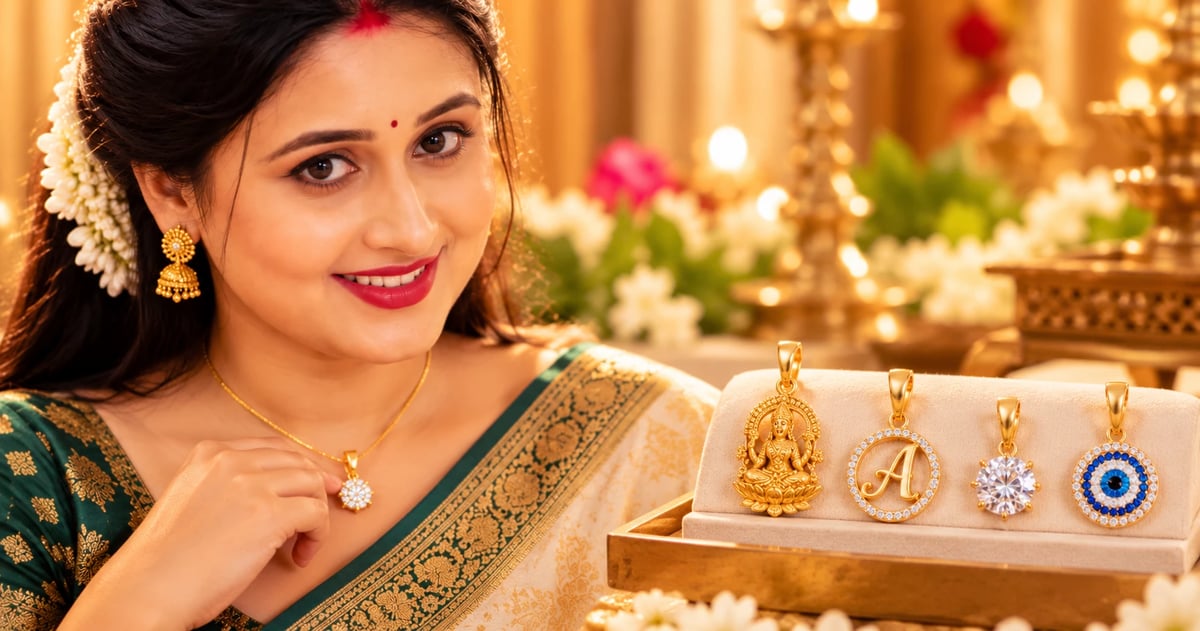
Today, 5 gram gold pendant designs with price quotes in 22K should land between ₹81,780 and ₹90,861. That range assumes 8% to 20% making charges, plus a ₹45 hallmark line and 3% GST. Every figure uses our 22K board rate of ₹14,695 per gram, updated 22 September 2026 at 11:02 am.
Rates move every day, so read these numbers as a worked example, not a quote.
Why 5 Grams Is the Sweet Spot for a First Pendant
Honestly, 5 grams is the sweet spot for most first-time buyers. It holds real detail, like a Ganesha's trunk or a crisp initial. Yet it stays light enough to wear every day on a thin chain.
A 5 gram 22K pendant carries about 4.58 grams of pure gold. That's because 22K, stamped 916, means 91.6% gold by weight. The rest is alloy, which makes the piece harder and more wearable.
Worried it'll look too small? Design decides that, not weight alone. Open, cut-out work spreads 5 grams across a wider face. Solid, domed shapes pack the same gold into a smaller, heavier-looking piece.
If you're weighing 5 grams against 10, the real gap is money. At today's rate, 10 grams of 22K gold alone costs ₹1,46,950, before making or GST. For daily wear, though, 5 grams sits more comfortably on a light chain.
Explore our West Bengal karigori Works !
What a 5 Gram Gold Pendant Costs Today, Line by Line
Here's how a pendant with 5.000 grams of net gold prices out in 22K. The rate comes from our Kolkata gold rate board, which shows the exact update time. Making is set at 12% purely as an example.
Worked example: 5 g 22K pendant at today's rate
Bill line | How it's worked out | Amount |
|---|---|---|
Gold value | 5.000 g × ₹14,695 | ₹73,475 |
Making charge (example) | 12% of gold value | ₹8,817 |
Hallmark charge | Fixed BIS fee per article | ₹45 |
Subtotal before tax | Sum of the lines above | ₹82,337 |
GST | 3% of subtotal | ₹2,470 |
Total | ₹84,807 |
So the 22K gold pendant price today, all in, is ₹16,961 per gram. That's about 15.4% above the bare 22K rate. After gold, the making charge is the only line with real room to move.
Our gold calculator for jewellery bills lets you run your own numbers.
5 gram gold pendant price list by making charge
Making charge | Making in ₹ | Total with 3% GST |
|---|---|---|
8% | ₹5,878 | ₹81,780 |
12% | ₹8,817 | ₹84,807 |
16% | ₹11,756 | ₹87,834 |
20% | ₹14,695 | ₹90,861 |
Each 1% of making adds about ₹757 once GST follows it. That means quotes of 10% and 18% on the same design differ by roughly ₹6,050.
How the same pendant prices in 18K gold
18K gold is 75% pure and stamped 750. Our board showed 18K at ₹11,900 per gram on 22 September 2026. With the same 12% making, that pendant totals ₹68,686. You save ₹16,121 against 22K.
You're buying less gold, though, and 18K looks slightly paler. At resale, jewellers pay by pure gold content, so 18K returns less per gram. On the plus side, 18K is harder and grips stones more securely.
Adding a chain to your 5 gram pendant
Pendant prices rarely include the chain. Weigh the two separately, because chains can carry a different making charge. A 5 gram pendant on a 4 gram chain means 9 grams of gold. At today's rate, that's ₹1,32,255 of metal before making or tax.
Our guide to gold chains under 10 grams covers chain weights that pair well with a pendant.
Choosing 5 Gram Gold Pendant Designs with Price in Mind
Gold pendant designs for women at this weight fall into a few families. At 5 grams, design moves the price mainly through making charges. You can compare live weights in our gold pendant collection before you visit.
Lakshmi, Ganesha and other religious pendants
Lakshmi and Ganesha pendants suit a first gold purchase or a Puja gift. Fine faces and ornaments usually mean handwork, and handwork raises making charges. Also ask whether the piece is hollow or solid. A hollow pendant looks bigger for its weight but dents more easily.
A mangalsutra pendant follows the same maths, but the black-bead chain is priced on its own. Likewise, 5 gram gold locket designs that open for a photo need a hinge, which adds labour.
Alphabet and initial pendants
Initial pendants are simple shapes, so their making charges tend to sit lower. They also make a personal gift that doesn't depend on faith or taste. One catch: a solid letter at 5 grams can look chunky. Outline letters spread the gold and look lighter on the neck.
Solitaire and stone-set pendants
Here the gold weight is only half the story. The diamond or stone is priced separately, by size and grade. So always ask for net gold weight, not gross weight. Gross weight includes the stone, and you shouldn't pay gold rate for it.
Stone-set pieces are often made in 18K, since the harder alloy holds settings better.
Evil-eye pendants
Evil-eye pendants usually pair gold with blue enamel or coloured stones. Check the net gold weight, because enamel and stones add grams but no gold. These designs are small by nature, so 5 grams gives you a bolder version.
Pendant designs for men at 5 grams
Men often wear pendants on heavier chains, where 5 grams can look modest. Plain Om motifs, geometric tags and initials hold up best at this weight. If he already wears a thick chain, the pendant may look lost. In that case, 8 to 10 grams is the better fit.
Making Charges and GST on a 5 Gram Pendant, Explained
Gold pendant making charges pay for the craft: casting, detailing and polishing. No national standard rate exists. Aditya Birla Capital's guide to gold making charges puts the usual spread at 6% to 25% of gold value. It also puts wastage, the metal lost in crafting, at 2% to 8% of weight when billed separately.
Percentage vs per-gram making charges
Some shops quote a percentage, while others quote rupees per gram. Convert both into rupees before you compare. At today's rate, even 6% equals about ₹882 per gram of 22K gold.
Next, ask whether wastage is billed on top. Paying full making and full wastage on one small piece deserves a question.
Why your bill should show 3% GST
For a finished piece bought over the counter, GST is 3% of the whole value, making included. The West Bengal Commercial Taxes Directorate's GST FAQ on gems and jewellery states this directly. It applies whether making charges appear separately or not.
Still, you'll see some bills charge 5% on making. That 5% rate belongs to job work, where a karigar crafts someone else's gold. On our example, a 3% and 5% split would add ₹176. Ask your jeweller how they invoice, and check anything unusual with a tax professional.
How to Check the BIS Hallmark Before You Pay
A 5 gram pendant must be hallmarked. BIS exempts only jewellery weighing up to 2 grams from mandatory hallmarking. Since 1 July 2021, a hallmark has three marks, per the Bureau of Indian Standards hallmarking FAQ.
Check these at the counter:
Find the BIS triangle logo, usually on the back or the bail (the loop the chain runs through).
Read the purity mark. It should say 22K916 for 22K, or 18K750 for 18K.
Note the HUID, a six-character code unique to that piece.
Enter the HUID in the BIS Care app under "Verify HUID". Then match the purity to your bill.
If the code returns nothing, or the purity doesn't match, don't pay. The same BIS FAQ says hallmarking costs ₹45 per article, whatever the weight. So a "hallmark" line that grows with weight isn't a hallmark fee.
Daily Wear or Gift: Picking the Right 5 Gram Pendant
For office wear, pick flat, smooth designs with no sharp edges to catch fabric. An initial or a slim evil-eye pendant works well under a collar. If you want something lighter for work, lightweight gold pendant designs of 2 to 4 grams may suit you better.
For gifting, a 5 gram pendant is a genuinely good choice. It feels substantial in the box without reaching a 10 gram budget. Religious motifs suit Puja and weddings, while initials suit birthdays.
Check our Necklace buying Guide !
Your Five-Line Check Before Buying a 5 Gram Pendant
The next time you compare 5 gram gold pendant designs with price tags, ask for five lines in writing. You want the rate with its timestamp, net gold weight, making in rupees, the ₹45 hallmark fee and 3% GST. If a shop can show all five, you can compare it fairly against any other.